
When I was four or five years old, I used to go into the cornfields with my father, grandfather and uncles to help them work. I’m not sure how much help I was, and I don’t have a lot of memories of those years, but I do remember the café de olla. My grandfather would start a little fire and put a big clay pot over the flames. He roasted the coffee, cinnamon, cacao, cloves, and star anise for a minute, then added the water and piloncillo (cane sugar). The scent bubbled up from the pot, filling me with happy anticipation. The warm, sweet, spiced coffee was the highlight of my morning.
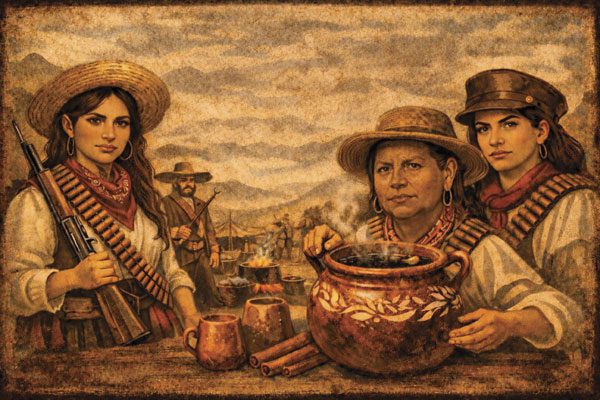
I didn’t know then what a big history café de olla had. It was always a part of my life, but history says it was born during the Mexican Revolution (1910–1920). During those hard times, coffee was precious. Supplies were limited, and nothing could be wasted. Soldiers often carried whatever beans they could find, brewing coffee repeatedly over campfires. The same pot might be reheated again and again, growing stronger and more bitter with each boil. Throwing it away was never an option, coffee meant warmth, alertness, and survival.
The transformation of that harsh coffee is credited to the soldaderas, the women who traveled with revolutionary troops. These women cooked, cared for the wounded, transported supplies, and sometimes fought alongside the soldiers. Many became known as Adelitas, named after the famous campesina, Adela Velarde Pérez, celebrated in revolutionary songs.
Faced with bitter, overworked coffee, the Adelitas began adding piloncillo and spices such as cinnamon and cloves. The sweetness softened the bitterness while the spices added warmth and energy. What began as a practical solution soon became something more, a drink that lifted spirits and reminded soldiers of home.
The drink was traditionally prepared in a clay pot, or olla de barro, which gives café de olla its name. The clay distributes heat gently and adds an earthy character to the flavor that metal pots cannot reproduce. Even today, many people believe café de olla tastes best when prepared this way, slowly simmered rather than rushed.
For me, café de olla is not only history; it is memory and identity. The smell rising from my grandfather’s pot in the fields connected generations without my realizing it. What the Adelitas created out of necessity became a tradition passed from family to family.
Over the years, I have made my own version, inspired by those mornings in the cornfields and by my heritage. Along with piloncillo, cinnamon, cloves and anise, I add a strip of orange peel. The citrus brightens the flavor and brings a gentle freshness to the sweetness and spice. Every time I prepare it, the aroma takes me back to childhood — to early mornings, wood smoke, and the feeling of belonging to something older than myself.

 Discover trusted local services and hidden gems with our easy-to-use online directory.


- The History of Café de Olla - March 28, 2026

Great story Sammy! Thank you for educating me on the history of my favourite coffee.