
So… Do Chicharras Really Call the Rain?
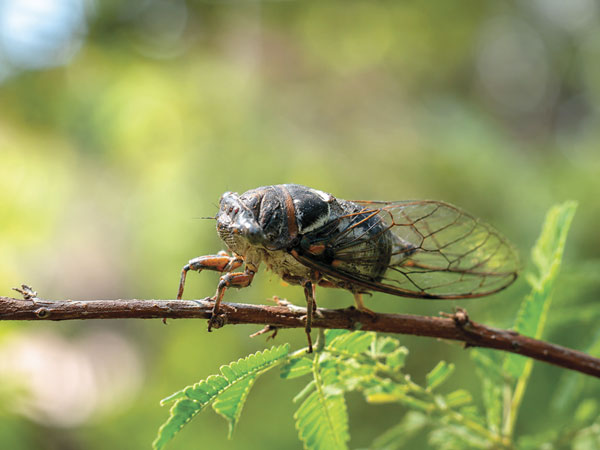
The first time I heard a chicharra, I thought a transformer was about to blow: Chica, chica, chica, chica, chica —whireeeeeeeh, whireeeeeeeh. The sound was mechanical, very loud and, for me, terrifying.
I ran outside and asked my neighbors, the resident street mechanics, “Did you hear that?!”
They looked puzzled and unfazed. Then the sound repeated.
“ESO!” I exclaimed.
They laughed. Not the reaction I expected for the impending explosion I was sure we were about to suffer.
“Eso es una chicharra.” They explained. “Llaman a la lluvia.” They call the rain.
A chicharra? I thought. What kind of strange beast is that? I imagined a pterodactyl-like raptor with fierce talons and a sharply hooked, predatory beak. It turns out that a chicharra is the local cicada, a one to two-inch insect with a booming “voice” that can exceed 100 decibels. Their electric shriek rivals a power steering pump low on fluid but sounds ten times as loud echoing down the cobblestone streets from above.
And what did that mean, they “call the rain?” Like many foreigners here, I immediately tried to sort the statement into categories. Was this folklore, a type of citizen science meteorology, mysticism? Some foreigners refer to them as “rain birds,” a misnomer that elevates the humble insect to legendary status. This camp embraces the poetic notion of folk knowledge with such enthusiasm that the idea of the chicharras calling the rain, and the rain generally showing up about a long month later, becomes evidence of ancient spiritual wisdom.
Another camp dismisses the mystical aspect of the chicharra’s annual cacophonous chorus and bombards you with technical facts. Cicadas emerge when the conditions favor their survival, I’m told. We start to hear them when the rising humidity softens the soil, and the spring heat accelerates their development. They’re cold-blooded. And they’re not singing at all. Male cicadas make their shrieking sound by rapidly vibrating ribbed membranes called tymbals on the sides of their abdomen. Their hollow bodies amplify the vibration like a loudspeaker. They’re not calling for the rain. They’re calling for mates.
Both reactions miss something. Nobody in my neighborhood seemed particularly concerned about whether the chicharras literally summoned storm clouds. The phrase simply exists comfortably alongside ordinary life. Over time, I began to understand that the phrase was less about scientific accuracy than seasonal memory. The chicharras arrive at the height of the dry, hot spring. They bring the promise of the summer rains at a time when the dust and the heat begin to feel unbearable.
I think many immigrants misunderstand Mexico because we are searching for certainty where Mexicans often seem comfortable with paradox. Some newcomers insist on scrubbing every folk belief clean until only literal fact remains. Others drape ordinary life in layers of mystical projection. Both impulses flatten reality. Mexico is not a cartoon of superstition. Nor is it an enchanted kingdom dispensing spiritual lessons to north-of-the-border retirees.
Long before Doppler radar and smartphone forecasts, people paid attention to patterns in the natural world. They noticed which birds appeared before cold weather, which insects emerged before seasonal change, which winds carried moisture from the coast. Human beings everywhere transformed observation into story because stories are easier to remember than data. Perhaps that is what survives in the phrase “the chicharras call the rain,” not primitive science, but communal poetry.
I no longer mistake the sound for failing electrical equipment. The screech rising from the trees now feels oddly reassuring, part of the cherished rituals of Lakeside spring. The sound belongs to hot dusty afternoons made tolerable with a cold beer and the afternoon breeze. Even if the chicharras do not literally call the rain any more than church bells summon Sunday morning, I can’t imagine spring without them.

 Discover trusted local services and hidden gems with our easy-to-use online directory.


- Editor’s Page – October 2026 - September 30, 2026
- Good Works Gazette – September 2026 - August 29, 2026
- Editor’s Page – September 2026 - August 28, 2026