Beyond Textbook Seasons
I didn’t experience a warm summer until I went to junior high. The four seasons I learned about in school taught that spring was rainy, summer was hot, fall was chilly with bright colored leaves and winter meant snow. None of this made much sense to me.
Summers in my Northern California hometown of Moss Beach were cold and foggy; and beautiful. Almost every morning, a huge white bank of fog sat just offshore in the Pacific, a fluffy, impenetrable wall. As the day went on, it slowly rolled inland over the cliffs and dirt streets, swallowing the cypress and Eucalyptus trees in soft gray light. Sound seemed quieter inside it and the world lost its sharp edges. Then, sometime around four or five in the afternoon, the wind would rise and the fog would begin to break apart. From our hillside home, I often watched the sunset over the Pacific Ocean through clear blue skies.
The other seasons didn’t conform to “standard” seasonal cycles either. Fall was often the warmest and sunniest season of all. Winter brought rain instead of snow. Spring did bring some rain, but it seemed to abruptly stop before the end of March. The seasons I saw outside my window belonged to a completely different world than the cartoon diagrams hanging in my classrooms at Farallone View Elementary.
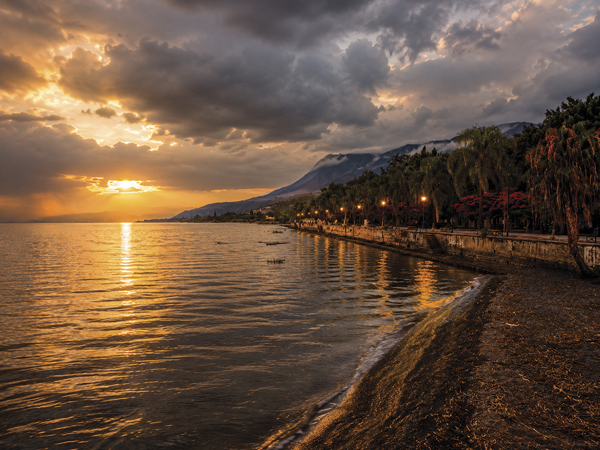
The seasons here in Chapala refuse to follow the schoolbook version as well. Spring is often the hottest time of year. By May, the hills are swathes of brown and dust clogs the air. Then summer arrives not with dry heat, but with nighttime storms that bring blessed relief and sometimes daytime rainstorms from distant hurricanes. Fall is mild and green with brown edges. Winter is barely colder than fall.
As a child, I thought the fog was magic. It made everything mysterious and otherworldly. Later, I learned the mechanics behind the magic. The cold water of the Alaskan current which runs south along the California coast cools the air above it, creating the fog. Inland heat rises, creating a vacuum that pulls that marine layer toward shore.
And here in Chapala, the rain that often politely waits for nighttime before inundating the streets and creeks feels magic too. But it also follows a logical pattern. All afternoon, the sun heats the lake and loads the air with evaporated water. This dense, warm, moist air is pushed upward along the mountainsides and gathers over the hills. After sunset, the mountain air cools rapidly and creates giant storm clouds. This unstable air triggers the gorgeous thunderstorms and heavy rain that are a hallmark of our summer nights.
I used to think there was a conflict between science and magic. But the older I get, the less interested I am in deciding whether something is magical or scientific. The fog that sparked my childhood imagination and the thunderstorms here in Chapala that leave me speechless in their beauty are both. They are atmospheric processes with easy explanations, and they are inspirational spectacles. Perhaps there is some wisdom in understanding both truths at once. The world does not become less mysterious when we learn how it works. It becomes more deeply, beautifully understood.
There is also a lesson in all of this about not blindly accepting some “truth” that doesn’t conform to our lived experience. Things are almost always more complex and more surprising than the limited explanations we find in textbooks, traditions, headlines, or popular opinion. We are all tempted to sort the world into simple categories and assume we understand things we have only glimpsed from a distance. But when we experience the world with curiosity rather than certainty, we gain a deeper understanding of both nature and one another.

 Discover trusted local services and hidden gems with our easy-to-use online directory.


- Good Works Gazette – September 2026 - August 29, 2026
- Editor’s Page – September 2026 - August 28, 2026
- Editor’s Page – August 2026 - July 30, 2026