
Sustenance
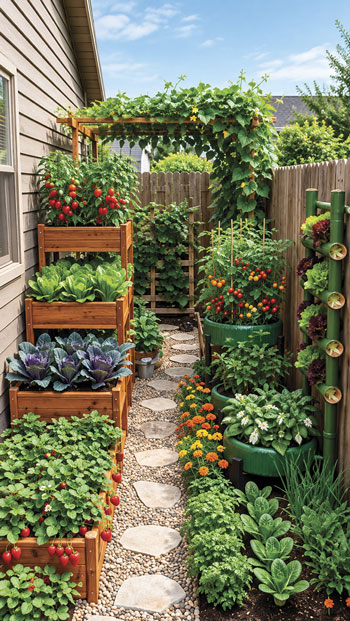
My friend Louraisha has been quietly creating a small home vegetable garden, or huerto, in Chapala Haciendas. She eats organic produce from her huerto and enjoys growing different crops throughout the year: cucumber, tomatoes, squash, spinach, parsley, cilantro, potatoes, peas, leeks, chives, zucchini, lettuce, and strawberries. Typically, a huerto is small and easily accessible from the main home structures. It is meant to be a feast for the eyes and soul. Louraisha finds all these things to be true. Even with land being scarce, growing in pots can be a good option, as she has proven.
What Is Planting by the Moon?
Planting by the Moon (also called “Gardening by the Moon”) is a traditional way to plant your above and below-ground crops, especially at the start of the season. Here’s how it works:
Plant annual flowers and vegetables that bear crops above ground during the light, or waxing, of the Moon. In other words, plant from the day the Moon is new until the day it is full.
Plant flowering bulbs, biennial and perennial flowers, and vegetables that bear crops below ground during the dark or waning of the Moon. In other words, plant from the day after the Moon is full until the day before it is new again.
Old-time farmers swear that this practice results in a larger, tastier harvest.
What to plant in November
Fall can still bring some hot, dry days that can be hard on plants if we haven’t had enough rain. If you’ve purchased fall flowers for pots, keep in mind that container plants dry out much faster than those in the ground.
The weather can be cool in the daytime and sometimes cold at night. At the viveros look for snapdragons, stocks, fuchsias, poinsettias (Nochebuenas), pansies, petunias and phlox. Sweet peas may begin blooming.
Fall crops do much better when started from transplants than from seed, and transplants should always be used for tomatoes and peppers. Buy the largest transplants available. Or you can start your own plants earlier in the season and transplant them. Plant shade tolerant crops between taller veggies like tomatoes.
During the fall season, cool weather allows crops to hold longer in the garden once mature. Crops like broccoli, cabbage, and kale can live for months in the garden after they reach maturity.
Create a display of fall colors with cool-season plants. Some examples include pansy, viola, snapdragon, dianthus and alyssum. Continue planting herbs from seed or transplants. A wide variety of herbs prefer cool, dry weather, including cilantro, parsley, sage, and thyme. Continue planting cool-season crops, such as beets, broccoli, cabbage, carrot, kale and lettuce.
Now is the time to give crowded plants some breathing room and tackle lingering pest problems. Divide and replant overgrown perennials and bulbs now so that they establish before the cold weather arrives. Take advantage of lower temperatures to apply horticultural oil sprays to control scale insects.
You can still plant lettuce, peas, kohl rabi, spinach and Swiss chard, beets, carrots, garlic, lettuce, mustard, onion, parsley, radish, spinach, turnips, and herbs, lettuce, broccoli, kale.
Many plants are going into their dormancy period, and fall is a good time to prune. Winter is a good time to prune large trees, shrubs and small trees. Deciduous foliage is absent and helps make pruning more visible and reduces clean up material. Plant colorful ornamental cabbage and kale for vibrantly rich reds, blues, and purples to accentuate other garden colors all winter long.

 Discover trusted local services and hidden gems with our easy-to-use online directory.


- Verdant View – November 2026 - October 29, 2026
- Verdant View – October 2026 - September 30, 2026
- Verdant View – September 2026 - August 29, 2026