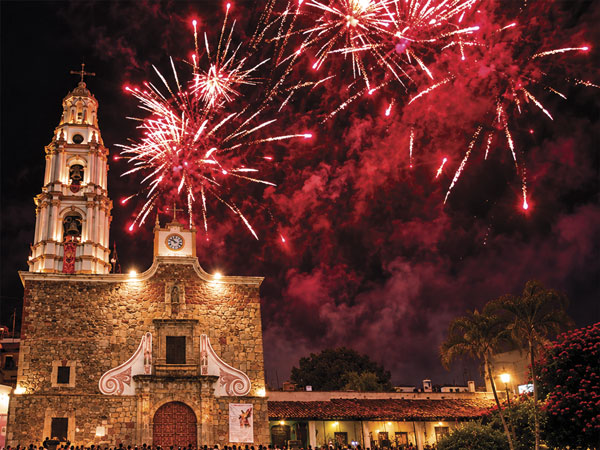
For three days in mid-November, 91 artisans from 17 states in Mexico will participate in the Feria Maestros del Arte in Ajijic. The Feria offers something rare: an opportunity for Mexican artisans to preserve their cultural heritage while earning a living from their work.
In addition to showcasing exceptional Mexican folk art, the fair is designed to remove the financial barriers that often prevent artisans from participating in exhibitions and selling their work directly to the public. Artisans pay no participation fee or commission on their sales, allowing them to take home 100 percent of their earnings.
For artisans like Héctor David Negrete, Cyania Cortes Padilla and José Ramírez Alejo, this opportunity has made a meaningful difference in the future of their craft and their families.
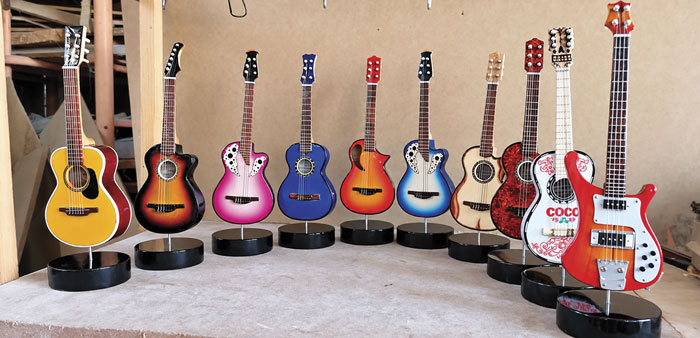
From Paracho, Michoacán, Héctor creates miniature string instruments that are extraordinary in both their precision and functionality. Working in the celebrated guitar-making tradition of his hometown, he produces tiny guitars, vihuelas, guitarrones, mandolins, and violins, carefully constructing each instrument with the same attention to detail as its full-sized counterpart. His creations feature real strings, accurate frets, miniature tuning pegs, and intricate decorative details.
“Si no funciona como instrumento, no está terminado.” If it doesn’t work as an instrument, it isn’t finished.
Despite his skill and dedication, Héctor faced a familiar challenge for traditional artisans: making enough money from his craft to support himself. He wanted to dedicate his time fully to creating his miniature instruments, but the financial realities of life required him to take other jobs. The opportunity created by the Feria Maestros del Arte helped Héctor reach a point where he can devote himself full time to his craft.
Cyania Cortés Padilla of Jiquilpan, Michoacán, has found a remarkable way to turn what was once considered a byproduct of the silkworm industry into beautiful, contemporary art. Seeing artistic potential in the cocoons themselves, Cyania cleans, treats, dyes, and transforms them by hand into distinctive jewelry and wearable art. Her work has helped bring new attention to the possibilities of sericulture in Jiquilpan, showing that the cocoon—once left behind or discarded—can become a valuable and beautiful source of income.
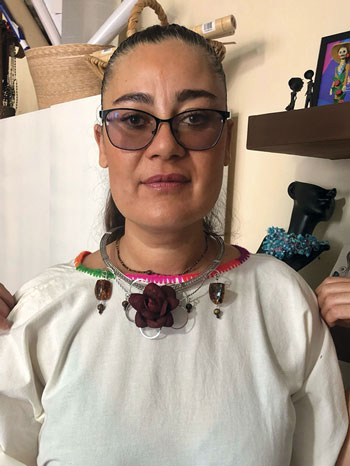
Cyania has gained an audience far beyond Jiquilpan, allowing her work and her ideas to reach people throughout Mexico. She has traveled and shared this knowledge with other artisans in many pueblos helping them find a means of making a living as well. What began as one artisan seeing potential in something others overlooked has grown into a way of sharing knowledge, creating opportunities, and revitalizing an important part of Jiquilpan’s silk tradition.
“El capullo encierra un cambio, me gusta pensar que mis piezas ayudan a mostrar ese cambio hacia algo nuevo y bello.” The cocoon holds a transformation; I like to think that my pieces help show that transformation into something new and beautiful.
José Ramírez Alejo, from Nurio, Michoacán, represents another path toward preserving traditional knowledge. A third-generation artisan, José makes traditional brooms from the roots of the tzurumuta plant, using techniques passed down through his family. The process is physically demanding, requiring the harvesting of roots from deep underground, followed by careful washing, drying, and preparation before the brooms can be constructed.
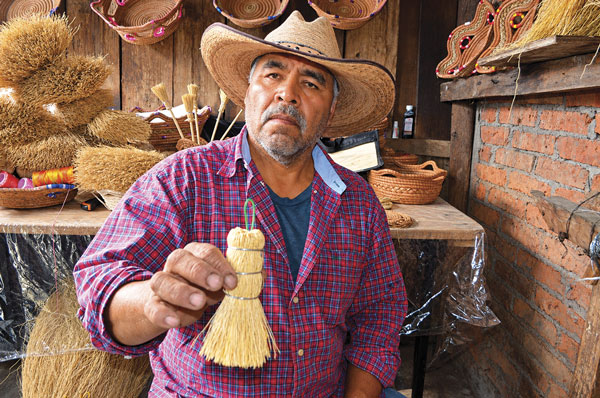
After studying stonemasonry, José returned to his family’s traditional craft and revived his father’s work. Today, he dedicates himself full time to broom making, helping to ensure that a tradition that was beginning to disappear will continue into the future. “Lo que hago no es solo para vender, es lo que somos.” What I do isn’t just about selling, it is who we are.
These three artisans illustrate what the Feria Maestros del Arte hopes to accomplish. Preserving traditional Mexican folk art requires more than admiration for beautiful objects. The Feria’s long-term vision is to encourage younger generations to follow in their parents’ and grandparents’ footsteps, demonstrating that traditional craftsmanship can provide a viable livelihood. When artisans can earn a living from their work, cultural knowledge has a better chance of surviving. Traditions can continue, families can thrive, and Mexico’s extraordinary artistic heritage can be passed on to another generation.
The Feria will be held November 13-15, from 9:30 am to 5 pm, at Hotel Real de Chapala in Ajijic. Admission is 100 pesos, all of which goes to support the artisans.
Mary Jacobs is the Artisan Logistics Coordinator for the Feria. She lives in Michoacan.

 Discover trusted local services and hidden gems with our easy-to-use online directory.


- Keeping Mexican Folk Art Traditions Alive - October 29, 2026
- Lakeside Living – November 2026 - October 29, 2026
- October 2026 Issue - September 30, 2026