

Birding at Lake Chapala
Here at Lake Chapala, we enjoy the perfect climate, which the birds like too. We have excellent birding opportunities available. In our village plazas, we see the same common species found in city centers around the world, such as Feral Pigeons, Eurasian Collared Doves, House Sparrows and Monk Parakeets. In our gardens we can see Wilson’s Warblers, Yellow-rumped Warblers, Canyon Wrens, Golden-fronted Woodpeckers, House Finches, Warbling Vireos, and Cinnamon-rumped Seedeaters. The lake is winter home to thousands of American White Pelican– our signature bird.
A beautiful aspect of birding in western Mexico is the wide variety of habitats we have nearby. We are in what is known as the Trans-Mexican Volcanic Belt which runs from Puerto Vallarta on the west coast to Veracruz on the east coast. By travelling one hour or less, we can reach wetlands, lakes, savannah grasslands, thorn forests and pine-oak forests.
Popular destinations to see birds
As the long-time leader of the local birding group, I am going to tell you the best places to see birds in our area. By joining the free bird walks conducted by Lake Chapala Birders (chapalabirders.org) you can see many of our local species.
On the boardwalks (“malecóns”) of Ajijic, San Antonio Tlayacapan and Chapala you can easily see all types of herons: Great Egrets, Snowy Egrets, Black-crowned Night Herons, Tricolored Herons and Great Blue Herons. At El Bajío, close to the Recycling Center on the west side of Ajijic, you can see Inca Doves, Vermilion Flycatchers, Broad-billed Hummingbirds, Violet-crowned Hummingbirds, Great Kiskadees and Social Flycatchers.
On the east side of Ajijic, our most popular bird walk is the Allen Lloyd Trail, which starts at the Ribera Medical Center Hospital on the Libramiento. The trail goes into the hills bordered by lots of undergrowth that the birds love to hide in. We often see some less common species here, such as colorful Russet-crowned Motmots, Orange-billed Nightingale Thrushes, Happy Wrens and the impressive Squirrel Cuckoos with their long tails and floating flight patterns.
One of our most popular day trips is to Rosa Amarilla, an agricultural village with savannah grasslands on the plateau overlooking the south side of the lake. There we see Canyon Towhees, Botteri’s Sparrows, Chihuahuan Meadowlarks and White-tailed Hawks.
Another popular day trip is to Lake Cajititlán, only a half-hour drive in the direction of Guadalajara. There we see Neotropic Cormorants, Ruddy Ducks, Bewick’s Wrens, Marsh Wrens, Common Yellowthroats and Wood Storks.
Another popular trip is to Lake Atotonilco in the Colima Rift Valley, just one hour by car from Ajijic. There we see colorful Roseate Spoonbills, White-faced Ibises, and the very pretty Western Grebes and Clark’s Grebes.
A whole other habitat exists at the top of our local mountains, where we see Flame-colored Tanagers, White-eared Hummingbirds, Pine Flycatchers and Mountain Pygmy Owls. You can reach these heights in three ways: by hiking for three hours up the trails above Ajijic to Chupinaya; by driving to the goat farm at the end of the International School Road and then hiking for three hours on an easy trail to the Oak Forest; or by driving 45 minutes to San Miguel Cuyutlán, just north of Jocotepec, and then driving to 10,000 feet at the top of Cerro Viejo, the third highest mountain in Jalisco.
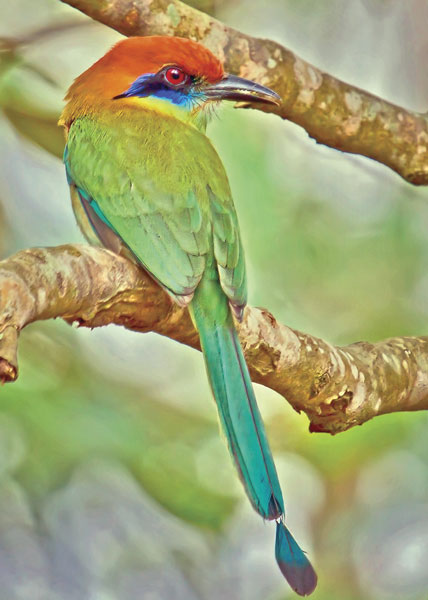
Photograph by Paul Hart
Annual Hawk Watch at Mezcala Mountain
A big feature of our area is the annual Mezcala Mountain Hawk Watch. In the first three weeks of October, we travel 20 minutes east from Chapala almost daily and then drive to the top of Mezcala Mountain to observe the migration. It’s the best place to view the passage of thousands of hawks such as Cooper’s, Red-tailed, Swainson’s and Kestrels.
Hawks hate to fly over water; instead, they fly around lakes. These birds are designed to produce only short bursts of power to chase and kill their prey and cannot actually fly for long distances by constant flapping. On migration, they glide continuously on sun-induced updrafts of hills and mountains all the way to Argentina in some cases.
To find out more about our monthly bird walks, go to chapalabirders.org and look at the latest newsletter. We like to keep things simple. There is no charge for the newsletter and no charge for membership in the group.

 Discover trusted local services and hidden gems with our easy-to-use online directory.


- Outdoor Living – May 2026 - April 28, 2026