
A Life-Changing Educational Opportunity
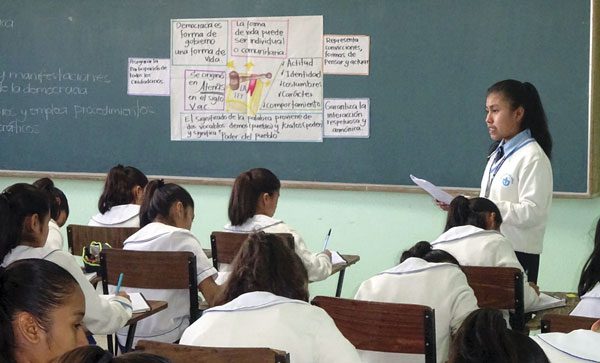
Beyond Lake Chapala’s flourishing expat communities, girls in poor indigenous families dream of better lives. But those dreams fade in the grim reality of the girls’ day-to-day existence. They’re surrounded by the constraints of poverty, parents struggle to provide even the basics for their children, illiteracy is common, and jobs are scarce. Educational opportunities are very limited, especially for girls. It can feel hopeless for the girls to dream of better lives – and for their parents to dream of brighter futures for their daughters.
But far from the dusty roads of Lake Chapala’s indigenous communities, an American missionary priest in 1960s South Korea also had a dream. Dedicated to serving the poorest children in the world, he knew that education was a luxury impoverished families simply could not afford. But Father Aloysius Schwartz also knew that education is the way out of poverty. He dreamed of establishing an elite residential school for very poor children – a school that would be funded entirely by education-minded benefactors.
Incredibly, with the help of generous donors, his dream became a reality. And the school in Korea served as a model for the network of similar schools that was subsequently developed in other countries.
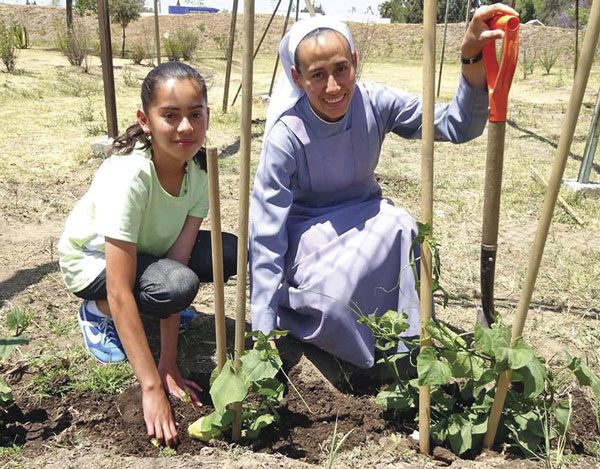
The Sisters of Mary, a congregation of Catholic nuns founded by Father Schwartz, began operating the school in Korea. Determined to find and help the most at-risk children, the sisters traveled by bus or pickup truck to poor rural areas to find disadvantaged children who were motivated to study. As the affiliated schools were gradually developed – in the Philippines, Mexico, Guatemala, Honduras, Brazil and Tanzania – the nuns began operating those schools as well. Today the sisters still operate the schools and provide guidance and support to students as they begin studying at elite schools they never could have imagined attending.
Villa de Las Niñas, one of the largest and most well-known of the schools, opened just outside Mexico City in 1991, initially for both boys and girls. In 1998 it became an all-girls school. With a current capacity of 3,500 students, the school is spread out over 35 hectares (86 acres). Replacing former farmland, the campus is comprised of classrooms, dormitories, two gymnasiums, an Olympic-sized swimming pool, basketball courts, football fields and other amenities. Applicants must have completed primaria (primary school) but not yet entered secundaria (secondary school). An entrance exam is required to determine if applicants are adequately prepared for the demands of a first-rate education. And school officials must be able to verify that applicants are from poor disadvantaged families.
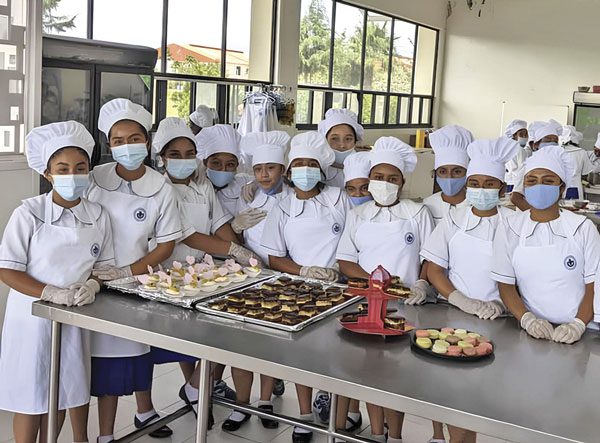
In 2024, with support and encouragement from parents and the indigenous communities’ social worker, a small group of girls applied to Villa de Las Niñas and were accepted. Sixteen more girls were accepted in 2025. Twenty-three indigenous Lakeside girls are now living and studying at Villa de Las Niñas. School expenses are completely covered for the students – including education and vocational training, meals, housing, uniforms, plus medical and dental care.
It’s a big leap for the girls to begin living and studying at an elite boarding school. Life in an indigenous community revolves around close family ties and traditional ways. But as students in an educational program that prioritizes study and academic achievement, the girls must follow firm guidelines and routines. Demanding classes, strict study schedules, dormitory living, and new faces from all over Mexico can be overwhelming. But new friendships are formed that ease the transition, and caring nuns and teachers offer reassurance to girls who are homesick.
The five-year program includes a wide range of academic subjects plus vocational training that is tailored to local business and industry needs. Classes in cooking, baking, and sewing are also offered to ensure that graduates develop a wide variety of skills. Sports, music, art and cultural opportunities are all available. The comprehensive curriculum and extracurricular activities gradually transform the girls into confident, well-educated young women who are ready to begin working or pursuing further education.
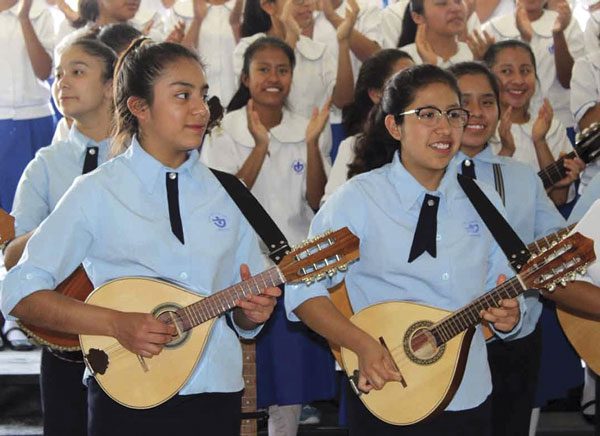
Several parents, grandmothers, and siblings gathered with visitors to share their thoughts about the unique educational opportunity. A father spoke proudly about his daughter who is studying at Villa de Las Niñas and plans to become a teacher. Mothers spoke of seeing increased self-confidence in their daughters and mentioned the advantage of fewer distractions at a girls-only school.
The girls attending Villa de Las Niñas are valuable role models who are planting much-needed seeds of hope in their communities. Younger siblings and other children – inspired by these role models – can now realistically dream of better lives, including the possibility of their own elite educations.
Graduates of Villa de Las Niñas, armed with excellent educations, increased self-confidence and employment opportunities, will be able to live up to their full potential and actually achieve their dreams. And parents can confidently envision bright futures for their daughters – futures beyond the limited economic and geographic boundaries of their communities.
The international fundraising organization for Villa de Las Niñas and the affiliated schools is World Villages for Children. The group is headquartered in Lanham, Maryland (a suburb of Washington D.C.) and there is also an office in London.
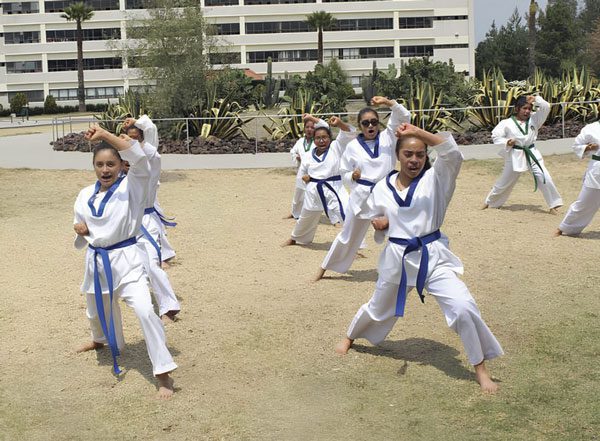
The Sisters of Mary is a congregation of 400+ nuns. In addition to operating the schools, the sisters provide guidance and emotional support for the students. The international headquarters for the sisters is in Manila, the Philippines.
One of Lakeside’s indispensable volunteer organizations, Poco A Poco San Pedro Itzicán, A.C., provides valuable assistance to the indigenous families that live along Lake Chapala in and around San Pedro Itzicán. Poco a Poco relies on volunteers and the financial generosity of Lakeside residents in order to continue helping the families. New volunteers are always welcome, and donations are definitely appreciated.
For more information:
pocoapocosanpedro@gmail.com
www.pocoapocosanpedro.com

 Discover trusted local services and hidden gems with our easy-to-use online directory.


- Lakeside’s Indigenous Girls - December 30, 2025
- A Voice For The Vulnerable - March 29, 2025
- OUR INDIGENOUS NEIGHBORS TO THE EAST - November 30, 2024