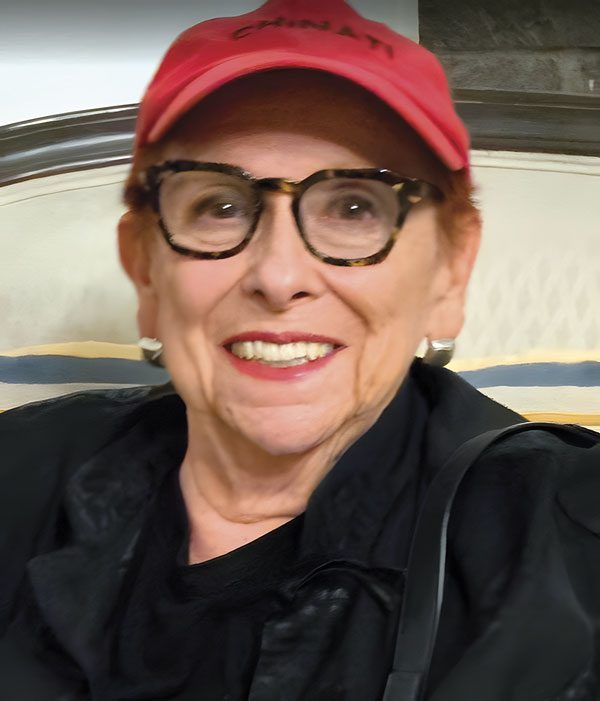
DIANA LEIDEL is an outspoken artist and second-wave feminist. Identifying as a “second-wave” feminist, Diana acknowledges and continues to fight for the hard-won rights of women, from the right to vote and property rights, to access to education and abortion secured by earlier generations. The heady 1960’s and 70’s brought an awareness of the pervasive oppression of women of all colors, and new ways of combatting it.
Diana’s visual talents shone early. At her elementary school in Allentown, Pennsylvania, she was selected for an early Gifted and Talented program, which continued through middle and high school, broadening her education well beyond the limitations usually placed on girls in the 1950’s. Her high school art teacher and first mentor recognized her talent in visual arts and urged her to apply to the prestigious (and then tuition-free) Cooper Union for the Advancement of Science and the Arts in New York City. She was accepted, majored in painting, and graduated with honors in 1968.
“My early paintings after Cooper were so angry, almost obscene,” she mused, “all, ironically, on the subject of women’s bodies.” One day she was asked by a friend if she could take her place for a day at a nonprofit abortion clinic in Manhattan – at the time when abortion had been legalized only in New York State. She agreed and stayed for four years.
Working as an abortion counselor solidified a desire to reform the healthcare system to meet the health and welfare needs of women. The clinic itself evolved into a women’s health collective, Women’s Medical Center, which became a vocal advocacy group developing courses to educate women about their bodies and their rights. With three other women, Diana founded Healthright, where, in collaboration with the Boston Women’s Health Collective, they created the first Patient’s Bill of Rights, now a standard document for men as well as women, in use at clinics and hospitals across the U.S.
During these post-college years Diana directed her artistic and graphic sensibilities to the creation of publications for the groups and causes she supported while also taking various jobs in the New York art world of the 1970’s. She worked at the Guggenheim Museum, the Sidney Janis Gallery, and Hearst-Avon Books, then decided to move formally into the role of art/creative director at national publications. She worked first for CBS publications, at Woman’s Day and Good Food magazines. At the peak of her design career in publishing she was the creative director for Dance Magazine, the world’s leading magazine of dance in all forms, and went on to found Pointe Magazine, devoted exclusively to international ballet.
During the 1980’s Diana earned a master’s degree in the emerging field of Media Ecology at New York University under the direction of her second mentor, Professor Neil Postman. Media Ecology examines how media – from language to computers and beyond – subconsciously shape perception and values, powerfully affecting human behavior. Correspondingly, Diana’s art creates curiosity and leads us to become conscious of and question our assumptions.
A good example was Diana’s art installation in Brooklyn’s Rockwell Place Community Garden, Messages from the Garden, in which she took snippets of text from novels and created 45 green and white lawn signs. Each sign featured one engaging but mundane quotation, in quotation marks, distributed randomly throughout the garden walks. By pulling everyday words out of their usual settings and scattering them like clues spoken by an unseen speaker or speakers, she invited viewers to rethink how meaning shifts when context falls away.
Diana’s latest project, 100 Women Arrested, likewise urges viewers to reconsider their preconceptions. Each of the one-hundred 8 x 8-inch black-and-white acrylic portraits mimics the artless style of a mugshot, with each woman’s name and her offense scrawled on the image. Some of the subjects were arrested for serious offenses, others were swept into the system for minor or even nonexistent crimes. The portrait subjects range from ancient history to the past year, some world famous, others virtually anonymous. In each portrait a woman who has been arrested looks directly into the eyes of the free viewer. The series aims to spark curiosity and discussion about the often-invisible social pressures and unspoken rules that shape how women are treated and judged by the legal system.
100 Women Arrested will be on view at the Chapala Cultural Center in the former town hall from Saturday January 17, 2026, through the end of the month. Watch for details of the opening and closing receptions.

 Discover trusted local services and hidden gems with our easy-to-use online directory.


- Lakeside Living – April 2026 - March 28, 2026
- Good Works Gazette – April 2026 - March 27, 2026
- Editor’s Page – April 2026 - March 27, 2026