How structure creates dazzling colors
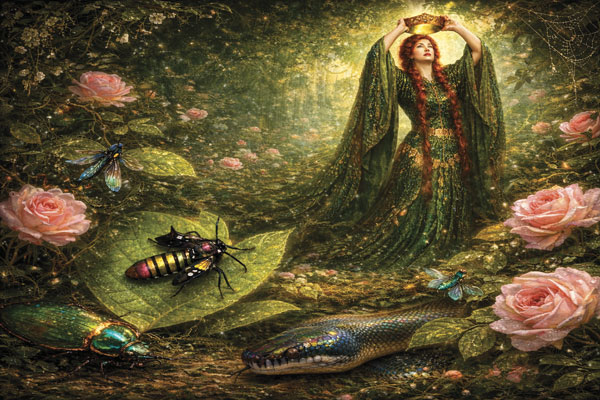
When the gifted actress Ellen Terry stepped onto the stage as Lady Macbeth in the 1888 premiere of Shakespeare’s Macbeth in London, the audience gasped. The object of their astonishment was not the actress, nor her demeanor, but rather the stunning, almost magical dress she was wearing. The dress shimmered in emerald green as she moved across the stage, reminiscent of the shiny scales of a slithering snake. It suggested the seductive power and the deadly ambition of Lady MacBeth. She would later advise her husband to “Look like the innocent flower, But be the serpent under’t.”
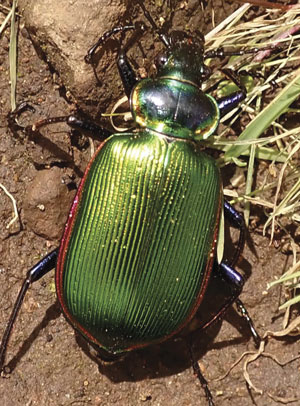
The technological innovation behind the stunning dress: It incorporated more than a thousand bright, iridescent wing casings (elytra) of the green jewel beetle (Sternocera aequisignata). The shimmering effect of iridescence produces some of the most brilliant, metallic, and eye-popping colors in nature. The colors of iridescent objects can change dramatically as the objects move or if you view them from a different direction. The apparent glow can also flash into view in direct sun and then go completely dark in the shade.
For many of us, the first time we noticed iridescence was in the swirling rainbow colors of a soap bubble or the colorful sheen of oil on a rain puddle. Nature is full of the same magic. Hummingbirds, peacocks, butterfly wings, neon tetras, rainbow trout, pearls, and certain gemstones all wow us with their show-stopping colors.
What makes iridescence so amazing is that the color does not come from pigments nor from the chemical composition of the object. Instead, the color comes from the physical structure of the object itself, which is why scientists often call it “structural coloring.”
Iridescence can be explained by reflection and the wave properties of light. For example, when sunlight shines on a soap bubble, it is reflected twice: once on the outer surface and once on the inner surface. If the reflected waves for a color line up perfectly, they strengthen each other and that color becomes bright and visible. If they don’t align, they weaken or cancel each other out. The alignment changes depending on the path that light takes. So one spot on the bubble may first appear green, but when you move and look at the bubble from a different angle, the same spot magically changes to red!
The same basic principle happens in animals. Many birds, butterflies, beetles, and fish have microscopic, layered structures, roughly the same thickness as soap film, that bend and reflect light. The thickness of these layers must be just right to produce a desired hue. Even a tiny change can dramatically alter the color. For example, a difference of only 24 nanometers (about 3000 times smaller than the width of a human hair) can shift the perceived color from green to blue.
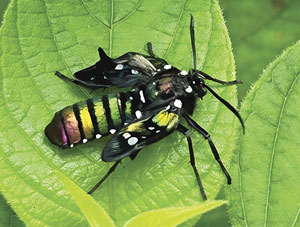
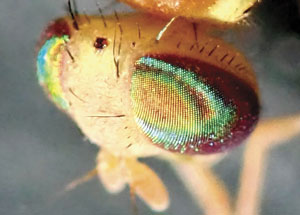
These shimmering colors are not just beautiful; they are useful. Animals use iridescence to recognize members of their own species, attract mates, hide in dappled light, or confuse predators with flashes of changing color. Some butterflies and nocturnal insects even use reflective tissues inside their eyes to improve night vision. These structures reflect the most useful wavelengths of light, giving their photoreceptors a second chance to detect movement in the dark.
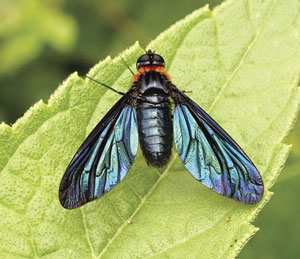
Like a prism, iridescence reveals the hidden beauty inside of light. It renders some of nature’s finest “eye candy.” So, the next time you notice a hummingbird’s ruby-red neck, a beetle gleaming green against the brown earth, or soap bubbles catching rainbows, pause for a moment and take in one of nature’s most magnificent light shows as iridescence takes center stage.

 Discover trusted local services and hidden gems with our easy-to-use online directory.


- The Ancestral Blueprints of Spider Webs - August 30, 2026
- Iridescence: Nature’s Light Show - April 30, 2026
- The Cataclysmic Origin Story of Leafcutter Ants - March 31, 2026