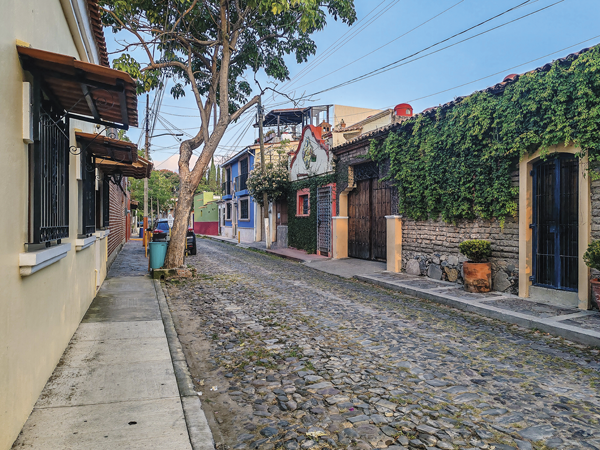

Above the Lake: Hiking Ajijic’s Hidden Trails
Have you ever looked up at the mountains towering above Lake Chapala and wondered what’s up there? As it turns out, there’s a wealth of exploration right at our doorstep. These mountains are part of the Trans-Mexican Volcanic Belt, a volcanic chain that runs east–west across central Mexico. The peaks rising behind Ajijic are volcanic in origin, formed by the same forces that created volcanoes like Nevado de Colima southwest of town.
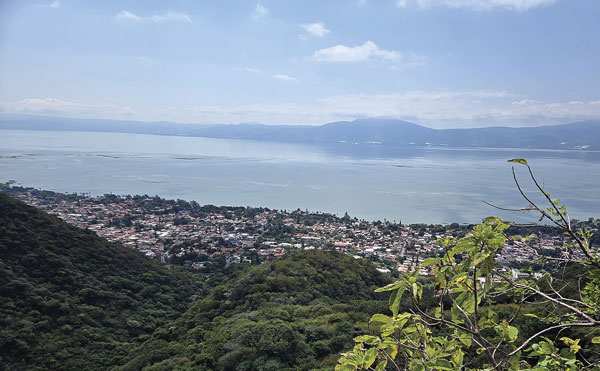
Within minutes of Ajijic, you can access a network of trails running both east–west and north–south. One of the first questions my wife and I had upon arriving last June was: how do we safely access these trails—and avoid getting lost? The mountains can feel intimidating at first, and the last thing we wanted was to find ourselves needing help.
Thankfully, the Ajijic Hiking Group meets twice a week—Tuesday and Friday mornings at 7:45 AM, departing promptly at 8:00. Hikes leave from the triangular plaza in front of Min Wah Chinese Restaurant, two blocks up Encarnación Rosas (the “Donas Donuts road”) from Farmacia Guadalajara on the Carretera in Ajijic. The group includes veteran hikers with deep knowledge of the trail network and a willingness to accommodate all skill levels. Typically, the day’s hike is decided that morning based on who shows up and the group’s experience level.
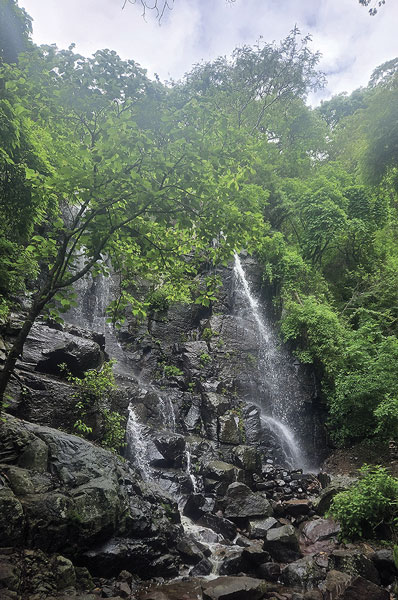
For beginners, several easy hikes are available, including routes to El Tepalo waterfall or up to the Chapel, visible from much of central Ajijic on the mountainside to the north. These hikes usually take between 45 minutes and 1.5 hours. More intermediate hikes may lead to spots like the Pandito or the Ceremonial Grounds. These routes generally take 2 to 3 hours and reward hikers with sweeping views of Ajijic and Lake Chapala.
Don’t forget to bring plenty of water—The American Hiking Society recommends between half a liter and a liter per hour, depending on intensity and heat.
For attire, lightweight, breathable, moisture-wicking clothing is best. UV exposure is strong at elevation, so many hikers opt for a breathable long-sleeve shirt, lightweight hiking pants, and a hat. Sturdy footwear with good grip—such as trail runners—is strongly recommended, as trail conditions vary by season. The dry season (November–May) offers clearer trails but more sun exposure and loose footing. The rainy season (June–October) brings more shade but can leave trails muddy. Hiking poles can be helpful on descents—but if you don’t have them, a sturdy stick works just fine.
The benefits of hiking are extensive: improved physical health, increased mental clarity, reduced stress, and a better mood. Hiking for just 30 minutes has been shown to reduce stress hormones by as much as 28 percent. Longer and more frequent walks can further improve stress markers like heart rate variability and cortisol levels, according to Martin Niedermeier of the University of Innsbruck. It’s also a great way to meet people. Hiking is one of the rare activities that benefits body, mind, and mood all at once—and it doesn’t feel like exercise in the traditional sense.
One of the best parts about hiking in Ajijic is the sense of discovery. No matter how many times you head into the mountains, there’s always something new to notice—shifting light on the lake, seasonal changes in vegetation, or a trail you hadn’t taken before. Wildlife sightings, from birds to small mammals, add to the experience, and the quiet of being above town offers a welcome contrast to daily routines. Over time, these hikes become more than just exercise—they become a meaningful way to connect with the landscape and feel truly at home.
We are grateful to the Indigenous communities of the Ajijic area for their stewardship of this land and for allowing others to enjoy its trails. As you explore this beautiful region, remember, take only memories and photos, leave only footprints.
Happy trails!

 Discover trusted local services and hidden gems with our easy-to-use online directory.


- Outdoor Living – June 2026 - May 30, 2026